Why SBMHC Florida Is Out-of-Network and What That Means for Your Mental Health Treatment

You deserve mental health care that’s driven by your actual needs, not by insurance limitations. The Sylvia Brafman Mental Health Center’s Florida outpatient treatment facility operates out-of-network with insurance, but that gives you a real advantage. You and your treatment team  – not the insurance company – decide how long you stay, which therapies you receive, and when you’re ready to progress.

It’s worth noting that if you have a Preferred Provider Organization (PPO) plan, out-of-network benefits typically cover a significant portion of your costs. Please note that our Georgia location offers in-network options for our residential treatment program. Call our patient advocates at (877) 958-9212 if you’d like to explore that option, or to discuss the nuances of your plan.

What Does It Mean to Be “Out-Of-Network”?

Being out-of-network doesn’t mean we don’t accept insurance at all. It means we’ve chosen not to sign contracts with specific insurance companies, expanding our ability to serve a wider clientele. You still submit your claims, and your insurance still pays their portion based on your plan’s out-of-network benefits. We handle the billing so you don’t have to.

In-network providers agree to accept their contracted insurance rate and sometimes require prior authorization before starting treatment. Out-of-network means we set our own rates and your treatment isn’t delayed by insurance authorization. The extent of your coverage depends on your specific plan, and many PPO (Preferred Provider Organization) plans offer solid out-of-network reimbursement.

Here are some of the key differences between in-network and out-of-network care:

AspectIn-NetworkOut-of-Network
Insurance AuthorizationOften required before treatment starts; delays careNot required; treatment begins immediately
Visit LimitsInsurance sets maximum number of visitsYou and your clinical team determine length of stay
Treatment DecisionsInsurance reviewer ultimately approves coverage for modalities and timingYour clinical team decides what you need
RatesFixed contracted rates (often lower)Facility sets rates; typically higher
Claims and BillingDirect billing to insuranceYou submit claims; we help with paperwork

If you have questions about how these differences impact your plan or particular set of circumstances, contact The Sylvia Brafman Mental Health Center for assistance verifying your insurance. Our patient advocates can review the nuances of your policy and provide information and guidance on what is available to you.

How Insurance Networks Control Mental Health Treatment Decisions

When using in-network care, insurance companies have a say in your mental health treatment decisions. They review which interventions you receive, the number of sessions you have, and ultimately determine when your treatment is complete. The treatment provider is bound by the rules set by the insurance company.

Understanding this in-network structure helps explain why some centers, such as Sylvia Brafman’s Florida outpatient treatment facility, choose to operate outside the insurance network. Key control factors of in-network care include:

  • Utilization Review: Insurance reviewers must approve your treatment plan, specific therapies, and medication changes for you to receive coverage in some cases. This can delay care and restrict therapeutic interventions recommended by your treatment team.
  • Step Therapy Requirements: You may be required to try lower-cost treatments first, even if your clinician believes a more intensive approach is clinically necessary.
  • Discharge Timing: Insurance determines how long you remain in treatment based on their guidelines, not necessarily when your recovery is complete.
  • Diagnosis Documentation: Your diagnosis must fit specific codes and descriptions that insurance recognizes and covers. Atypical presentations may not qualify for the same level of care.
  • Visit Caps: Many plans limit the number of therapy sessions per year, regardless of your ongoing clinical need.
  • Prior Authorization Delays: Treatment often can’t start until insurance approves it, which can postpone care by days or weeks.
  • Medication Restrictions: Your insurance may require you to use generic or preferred medications before approving newer or more expensive options, even if your psychiatrist recommends a specific brand-name medication.

These are some of the key reasons Sylvia Brafman’s Florida outpatient treatment facility favors out-of-network. Here, your treatment plan is determined by our expert team, not insurance reviewers. Your length of stay, the therapies you receive, and your discharge timing are all based on your actual recovery needs, not insurance guidelines. That’s the difference out-of-network care makes.

The Mental Health Privacy Risk Most Families Don't Know About

The Mental Health Privacy Risk Most Families Don’t Know About

When you use in-network mental health coverage, your insurer must receive your formal diagnosis and treatment information to process claims. This is a standard requirement of how health insurance functions, but it raises a privacy concern you may not have considered.

Once that diagnosis is in your insurer’s records, it may be accessible to other companies evaluating your future applications for life insurance, disability coverage, or certain employer-sponsored plans. Life insurance underwriters, in particular, routinely review complete medical histories, including mental health treatment records from insurance claims, when assessing risk and determining eligibility and premium rates.

While mental health diagnoses don’t automatically disqualify you from life or disability insurance, they can influence outcomes and premium costs. The concern is that seeking support through in-network insurance creates a documented trail that future insurers may discover, potentially affecting your insurability or rates for years to come. In Florida, mental health records are strongly protected by state law and HIPAA, and insurers must maintain strict confidentiality. However, that protection covers how information is handled within the insurance system, not whether future insurers can access and use it.

Out-of-network care, by contrast, keeps mental health treatment separate from insurance records. When you pay out-of-pocket for therapy, you avoid creating a formal claims trail with your health insurer – you can instead send a less detailed superbill to your insurance provider for reimbursement. This means future insurers and employers won’t have documented proof of your diagnosis or treatment. While out-of-network care requires upfront costs, this trade-off can act as a valuable protection for your long-term financial privacy and flexibility.

Clinical healthcare team at SBHMC showing our close-knit, family-like atmosphere

Who Is Out-of-Network Mental Health Treatment Right For?

Out-of-network care isn’t the right choice for everyone. If you have an HMO plan with limited out-of-network benefits, or if your insurance has robust coverage for in-network providers, staying in-network may make more financial sense. But for certain situations, out-of-network treatment, such as that at Sylvia Brafman, can be transformative. Here’s who benefits most:

  • People with complex or co-occurring diagnoses: When you’re dealing with multiple mental health disorders at once (for example, depression combined with anxiety and substance use), insurance step-therapy and visit caps often don’t fit your reality. We, as your treatment team, need time and space to address everything together through Integrated Dual Diagnosis Treatment (IDDT).
  • People who’ve been through treatment before without lasting results: If past in-network care didn’t stick, it may be because treatment was cut short or limited by insurance timelines. Our out-of-network care allows us to stay with you longer and adjust your treatment plan as needed.
  • People who need a longer runway: Some recoveries can’t be rushed. If you need weeks (not just days) to stabilize, build skills, and prepare for discharge, out-of-network treatment removes the feeling of a ticking clock against you.
  • Families who want full involvement in treatment: Out-of-network programs like those at Sylvia Brafman often have more flexibility to include family sessions, education, and communication without hitting visit limits or authorization blocks. Here, you have several “bonus” interventions built into the fabric of your treatment plan.
  • People with PPO plans and meaningful out-of-network benefits: If your PPO covers a solid percentage of out-of-network care (50-80%), the out-of-pocket treatment costs may be manageable while you gain the clinical freedom.
  • People dealing with treatment-resistant conditions: When standard approaches haven’t worked, we may need to try newer therapies, medication combinations, or intensive modalities that insurance often restricts or delays access to.
  • People who’ve experienced insurance denials or delays: If you’ve been stuck waiting for prior authorization or had recommended care denied, out-of-network programming eliminates that barrier.
  • People prioritizing clinical fit over network convenience: If our specific team, approach, or specialties are the right match for you, our out-of-network status shouldn’t be the reason you miss the opportunity for aligned and comprehensive treatment.

Out-of-network care shines when you need flexibility, individualized decision-making, and time to heal without external pressure. If you recognize yourself in any of these situations, it might be worth exploring out-of-network treatment at Sylvia Brafman. Contact us today to learn more about the benefits of our out-of-network outpatient treatment programs.

What Does Out-of-Network Mental Health Treatment Actually Cost in Florida?

Out-of-network rates can initially seem high. But most PPO plans offer out-of-network benefits, meaning your insurance reimburses 50%-80% after you meet your deductible. So if your plan covers 70%, your insurance pays that amount, and you pay the remaining 30%. Additionally, some PPO plans have an annual or lifetime out-of-network maximum. Once you hit it, your plan pays 100%.

At The Sylvia Brafman Mental Health Center in Florida, our patient advocates handle the billing so you don’t have to. After treatment concludes, we submit a superbill (an itemized invoice of all services) to your insurance. Your insurance processes the claim and reimburses you or us directly, whatever the case may be. You’re responsible for your deductible and coinsurance, but we assist with the paperwork so you’re not doing it alone. Many find that out-of-network mental health treatment, filtered through insurance benefits, costs less than expected. The sticker price you see at first glance isn’t the real, final price.

Before starting treatment, it’s key to get the answers to the important questions:

  • Do you have out-of-network benefits?
  • What percentage will your insurance cover for mental health?
  • What’s your deductible status?
  • Is there a coinsurance cap or out-of-network maximum?
  • Do you need prior authorization?

We understand that gathering this information can be overwhelming, which is why we offer insurance verification services. Our patient advocates can get these answers on your behalf and estimate your out-of-pocket cost before arrival. No surprises here.

Verify Your Out-of-Network Mental Health Benefits

Understanding your out-of-network coverage doesn’t have to be complicated. At Sylvia Brafman, we understand, however, that the details matter; your deductible, coinsurance percentage, and any out-of-network maximums all affect what you’ll actually pay. A few minutes verifying your benefits now saves confusion and stress later.

Our insurance verification form is quick, confidential, and designed to give you clarity. You provide your basic information and insurance details, and our billing team handles the rest. Everything you share is kept private and protected; No pressure, no surprises, just the facts you need to move forward.

[]

Why Effective Mental Health Treatment Often Requires More Time Than Insurance Typically Allows

Recovery isn’t linear, and it rarely follows an insurance company’s timeline. Many in-network plans limit mental health treatment to a fixed number of days or sessions, regardless of where you are in your healing. These caps exist for financial reasons, not clinical ones.

Out-of-network care removes those limits, letting you and your treatment team decide when you’re truly ready to step down. The first weeks of intensive outpatient or partial hospitalization programming are often about stabilizing and learning the basics: managing acute symptoms, starting medications, and building safety. Real progress takes longer. As time goes on, you’ll start to process thoughts and feelings, learn new coping skills, and address the root causes of your struggles. If your insurance plan limits your treatment, you may find yourself completing it just as the work is deepening. Out-of-network treatment lets us extend care based on what you actually need, not what an insurance reviewer thinks is “enough.”

When it comes to mental health and co-occurring substance use disorders, discharge timing matters enormously. Leaving too early often leads to relapse, readmission, or crisis. Staying a few extra days to solidify skills, reconnect with your family, and arrange ongoing outpatient support can be the difference between sustained recovery and cycling back through the system.

We, as your treatment team, are the people who have gotten to know you, your history, and your capacity. With out-of-network care, we make that call, not your insurance policy. That clinical judgment, not insurance bureaucracy, determines when you go home.

Therapy room at SBHMC

Why Choose SBMHC Florida for Mental Health Treatment Near Fort Lauderdale?

Sylvia Brafman is a primary mental health treatment center near Fort Lauderdale, Florida. We specialize in complex cases: co-occurring diagnoses, treatment-resistant conditions, and patients who have struggled in other programs. Here, your clinical care comes first; everything else supports that.

Your treatment decisions aren’t made by insurance reviewers. They’re made by your collaboration with an expert team of mental health professionals led by Ben Brafman, MS, LMHC, co-founder and Chief Clinical Officer. He has spent 30+ years as a nationally recognized leader in behavioral health. Your psychiatric team is helmed by Dr. Richard Seely, MD, our Director of Psychiatry, a Princeton-educated psychiatrist who served for the Miami Dolphins. You’ll also be supported by our medical director, Linda Dolin, MD, as well as the spiritual ambassador, Michael Malamed, and Sylvia Brafman’s co-founder/CEO, Jamie Blaustein.

We treat all aspects of your well-being through our 5 Lanes approach: clinical, medical, psychiatric, spiritual, and vocational. Most facilities hit one or two of these points within treatment. At Sylvia Brafman, we run all five from day one and adjust every part of your care based on what actually works for you. Your treatment isn’t generic; it’s personalized to your needs and continuously refined as you progress. We also emphasize family involvement in your recovery.  For families exhausted by the cycle of treatment without lasting results, our Family Program is often the missing piece. Furthermore, if you’re enrolled in our partial hospitalization program and need extra support, we offer nearby, comfortable FARR-certified accommodations.

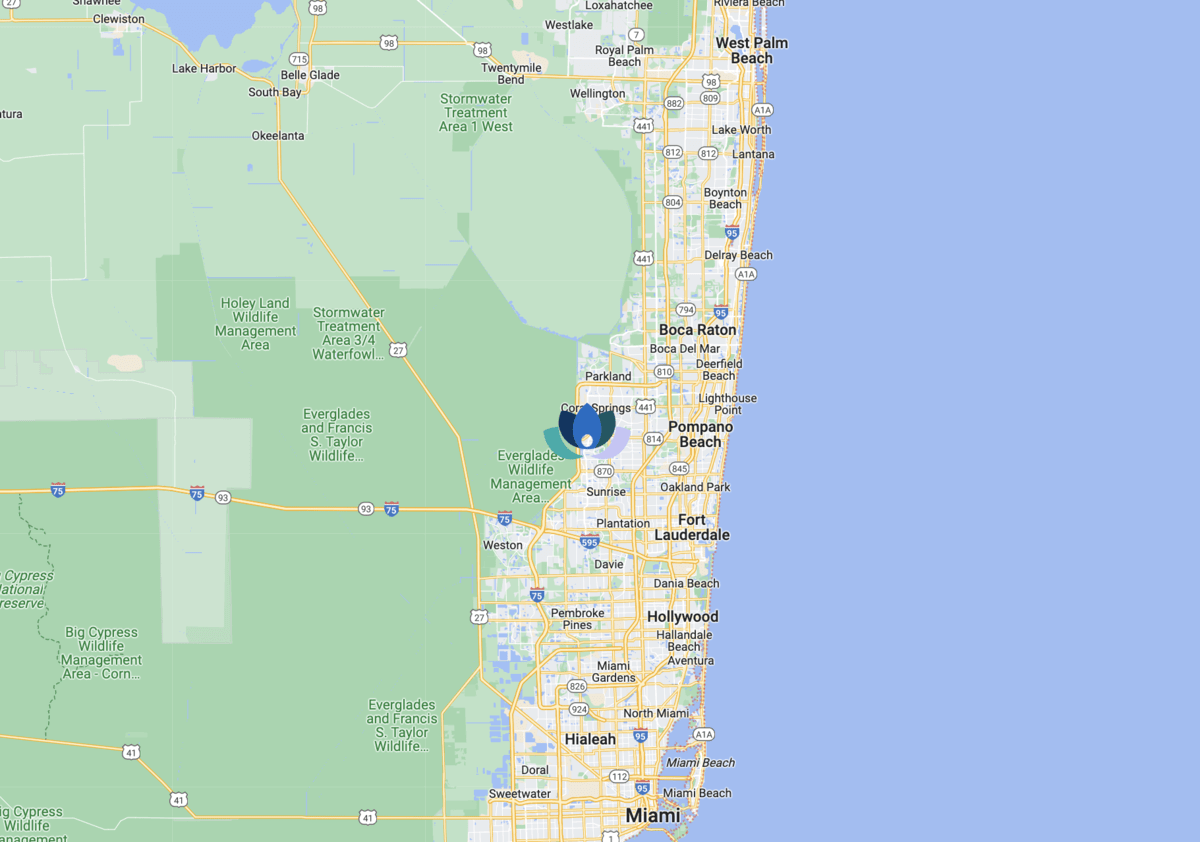
You’ll never be anonymous here at The Sylvia Brafman Mental Health Center. Our small, intimate setting means our clinical team knows each patient in depth. Located at 7710 NW 71ST CT, Tamarac, Florida 33321, we’re ready when you are. Call us at (877) 958-9212 to talk about the ins and outs of your situation. Take the next step on your path to meaningful change and lasting wellness.

map-sylvia-brafman-mental-health-center-south-florida

Frequently Asked Questions About Out-of-Network Mental Health Coverage at Sylvia Brafman

Navigating out-of-network mental health coverage can be confusing. At The Sylvia Brafman Mental Health Center, we get your questions about insurance, reimbursement, and costs. This section addresses common concerns to help you understand your coverage options and what to expect when seeking care with us.

Does SBMHC Accept Any Insurance?

Does SBMHC Accept Any Insurance?

SBMHC’s Georgia location is in-network with most major insurances, so claims are processed directly with your insurer. The Florida treatment facility in Tamarac is out-of-network, but most PPO plans still cover 50-80% of costs after your deductible. Contact the Sylvia Brafman patient advocates to verify the out-of-network benefits for your specific plan before admission to our Florida outpatient treatment center.

What Is a Superbill and How Do I Use It?

What Is a Superbill and How Do I Use It?

A superbill is an itemized invoice listing all services you received during treatment: therapy sessions, psychiatry visits, medications, assessments. After your treatment concludes at our Florida facility, you submit this superbill to your insurance for out-of-network reimbursement. Your insurance processes it and reimburses you based on your plan’s coverage percentage. Our patient advocates handle the paperwork on your behalf.

Will My PPO Cover Out-Of-Network Mental Health Treatment?

Will My PPO Cover Out-Of-Network Mental Health Treatment?

Most PPO plans include out-of-network mental health coverage, typically paying 50-80% of costs after you meet your deductible. Your coverage depends on your specific plan. Contact your insurance carrier to confirm you have out-of-network benefits and ask what percentage they cover. Our patient advocates can verify your benefits before admission.

Does SBMHC Accept Medicaid or Medicare?

Does SBMHC Accept Medicaid or Medicare?

No, The Sylvia Brafman Mental Health Center does not accept Medicaid or Medicare. We are out-of-network and work exclusively with major private insurance networks. However, this approach allows for more personalized, flexible care. We also offer financial flexibility for uninsured patients. Contact us to learn more.