









Is Dialectical Behavior Therapy (DBT) the Best Treatment for Borderline Personality Disorder (BPD)?
With a prevalence of about 12% in outpatient populations and 22% of those admitted to residential psychiatric facilities, borderline personality disorder often feels like weathering relentless emotional tempests. Intense feelings, shifting self-image, and strained relationships can make daily stability feel nearly impossible.
Grounded in decades of clinical research, Dialectical Behavior Therapy (DBT) stands as the first-line treatment for this Cluster B personality disorder. This page highlights DBT for BPD, the therapy’s history, and the proven skills that transform overwhelming inner turmoil into manageable, lasting peace.
Understanding Borderline Personality Disorder: History and Evolving Perspectives
Historically, clinicians struggled to categorize individuals who displayed intense, fluctuating distress that seemed to fall right on the periphery of classic diagnostic boxes. Mid-twentieth-century practitioners coined the label ‘borderline personality disorder’ because patient presentation seemed to balance precarious inner stability against severe, reality-breaking instances. These moments seemed to “border” the line between neurosis and psychosis.
Because early theories viewed these patterns as deeply ingrained characteristics, standard talk therapies often faltered, leaving many practitioners pessimistic about long-term progress. Over recent decades, advanced neurobiology and observational research fundamentally reshaped how the scientific community views borderline personality disorder symptoms.
Official recognition of the condition arrived with the third edition of the Diagnostic and Statistical Manual of Mental Disorders in 1980, replacing ambiguous clinical theories with explicit diagnostic benchmarks. Successive revisions in 1994 and 2013 further honed these parameters, sharpening clinical accuracy while addressing long-standing debates surrounding diagnostic consistency.
Researchers have identified the root issue as heightened, prolonged sensitivity to emotional stimuli paired with delayed recovery to a calm baseline state. Reframing borderline personality disorder as a manageable skill deficit in emotional regulation rather than an unchangeable personality flaw opened the door to specialized therapies. Examining BPD through this newfound lens turned what was once considered a lifelong struggle into a highly treatable and manageable condition.
The Evolution of DBT: From Traditional Cognitive and Behavioral Psychology to Dialectics
Traditional cognitive and behavioral psychology revolutionized mental health care by establishing clear protocols for identifying unhelpful thought patterns and modifying unsafe actions. Standard Cognitive Behavioral Therapy (CBT) offered clients structured frameworks to reshape internal beliefs, providing a practical foundation for therapeutic progress.
While these techniques prove highly effective for many conditions, practitioners discovered that rigid behavioral change strategies often failed when applied to the severe, chronic emotional turmoil indicative of borderline personality disorder. Clients facing overwhelming distress frequently felt invalidated by standard methods that focused purely on fixing perceived flaws, often resulting in intense emotional resistance.
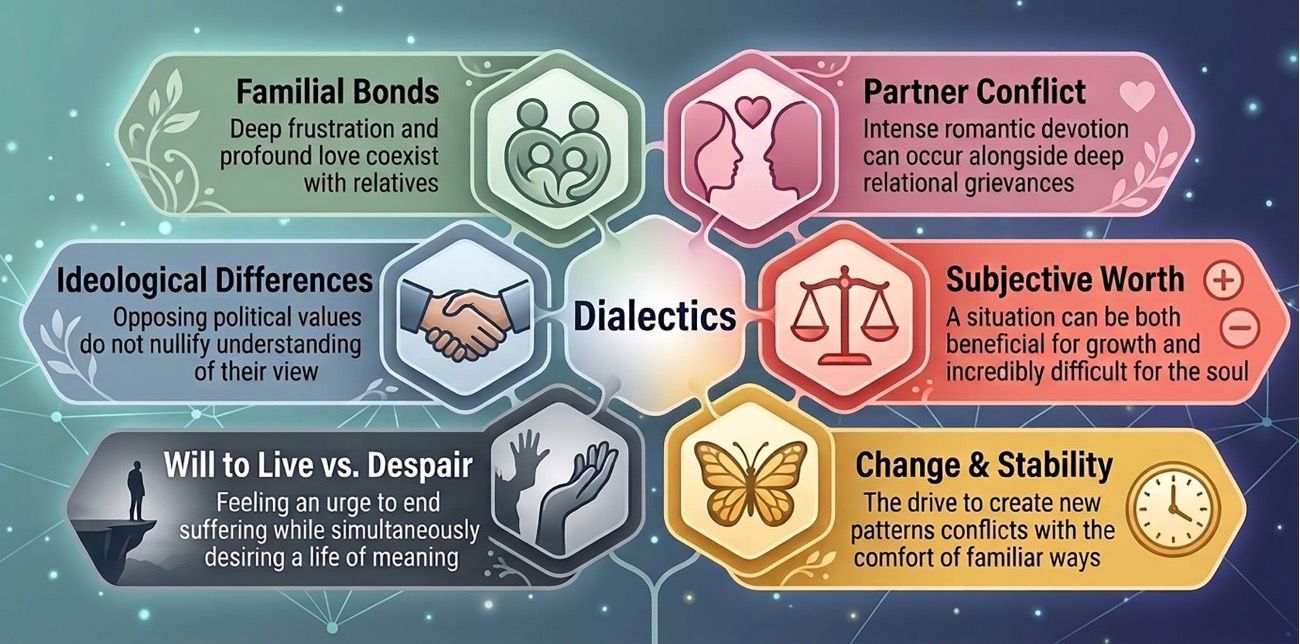
Recognizing these limitations, CBT’s origins were expanded upon by weaving radical acceptance with Eastern mindfulness principles. Integrating dialectics, a framework holding that opposing truths exist simultaneously, allowed clinicians to validate a client’s immediate experience while encouraging growth. This blending of conflicting perspectives to find a balanced middle ground formed the foundation for modern Dialectical Behavior Therapy (DBT).
Who Created DBT? Marsha Linehan’s Groundbreaking Approach
Dr. Marsha Linehan revolutionized behavioral health in the late 1980s by pioneering dialectical behavior therapy, creating this groundbreaking intervention tailored specifically for profound psychological pain. As the creator of DBT, her clinical innovation bridged empirical research with deep empathy, establishing a world-renowned treatment framework that permanently transformed care for individuals navigating suicidal ideation, self-harm, and borderline personality disorder.
If you’re experiencing thoughts of suicide, call or text 988 to connect with a compassionate specialist. In an immediate life-threatening emergency, call local emergency services at 911.
What made Dr. Marsha Linehan’s BPD research exceptionally powerful was her courage to blend rigorous academic science with extensive personal insight. Having lived in a psychiatric hospital for two years to keep from harming herself, she privately faced her own severe emotional struggles as a young woman. Dr. Linehan understood firsthand the agony of feeling misunderstood by traditional medical systems. This unique perspective drove her to construct a model that treats clients with dignity, validating their immediate reality while equipping them with concrete behavioral tools, essential for “building a life worth living,” which is also the title of Dr. Linehan’s memoir.
What Is Radical Acceptance?
Radical acceptance involves completely acknowledging reality as it exists in the present moment, without attempting to fight, judge, or deny painful facts. Rooted in dialectical behavioral principles, this practice encourages individuals to stop pouring energy into resisting unavoidable truths, recognizing that suffering stems not from pain itself, but from refusing to acknowledge hard situations.
Choosing to stop fighting what has already occurred frees up vital cognitive and emotional bandwidth needed to move forward. Embracing this mindset doesn’t mean approving of unfair circumstances, surrendering to mistreatment, or displaying passive resignation. Instead, it offers a pragmatic starting point for genuine transformation by helping you see your circumstances clearly. By setting aside bitterness and unproductive questioning of why something happened, you can step out of painful emotional loops and begin taking intentional steps toward meaningful change.
DBT vs. CBT for Borderline Personality Disorder: The Key Differences
While traditional cognitive behavioral therapy excels at identifying distorted thought patterns, dialectical behavior therapy remains the undisputed treatment choice for borderline personality disorder. By integrating radical acceptance alongside skill-building, DBT equips you with real-time coping mechanisms specifically crafted to defuse extreme emotional intensity and stabilize tumultuous personal relationships. Consider the following table for additional key differences between CBT and DBT:
| Therapeutic Dimension | Cognitive Behavioral Therapy (CBT) | Dialectical Behavior Therapy (DBT) |
|---|---|---|
| Primary Focus | Identifying, challenging, and restructuring unhelpful cognitive beliefs | Balancing intentional behavioral change with radical self-acceptance |
| Core Methodologies | Cognitive reframing, behavioral experiments, and direct problem-solving | Four structured skill modules: mindfulness, distress tolerance, emotion regulation, and interpersonal effectiveness |
| Emotional Handling Strategy | Modifying underlying thought loops to alter resulting emotional reactions | Validating current emotional experiences while learning to survive acute distress without reacting impulsively |
| Treatment Format | Structured individual weekly sessions focused on targeted symptom reduction | Comprehensive model combining individual therapy, group skills training, and real-time crisis coaching |
| Ideal Clinical Fit | Acute anxiety, unipolar depression, phobias, trauma, and specific cognitive distortions | Chronic emotional instability, severe relationship volatility, recurring crisis states, and borderline personality disorder |
DBT for Borderline Personality Disorder: Is It the Best Treatment?
Decades of research consistently position Dialectical Behavior Therapy (DBT) as the go-to evidence-based psychotherapy for Borderline Personality Disorder (BPD). When evaluated against alternative therapeutic models, the data confirm that DBT for BPD offers unparalleled efficacy in reducing self-harming behaviors, decreasing psychiatric hospitalizations, and fostering long-term emotional stability.
Research published in Borderline Personality Disorder and Emotional Dysregulation reveals that over 75% of individuals no longer met diagnostic criteria for BPD following twelve months of dialectical behavior therapy. Evidence also highlights its capacity to lower the need for prescriptions and medical care by as much as 90%.
While DBT is not a cure, major health organizations worldwide endorse it as the primary, first-line intervention for borderline personality disorder due to the plethora of positive outcomes. That said, determining the best therapy for BPD comes down to your unique needs. A mental health assessment is an enlightening, no-pressure first step in identifying the right level of care and corresponding therapies.
Core DBT Skills Useful in Treating BPD
Dialectical behavior therapy offers powerful tools to stabilize intense moods, strengthen personal relationships, and cultivate inner peace. Engaging in a DBT skills group equips you with practical strategies to manage overwhelming moments, replacing impulsive actions with thoughtful choices. The following core DBT skills are useful in treating borderline personality disorder:
- Mindfulness: Developing present-moment attention allows you to observe thoughts and sensations without judgment. This core ability fosters a balanced state where rational thinking and emotional experience align to guide wise decisions rather than impulsive actions.
- Distress Tolerance: When emotional crises strike, distress tolerance techniques equip you to endure intense pain without resorting to self-destructive behaviors. You’ll learn to alter body chemistry quickly and practice radical acceptance.
- Emotion Regulation: You’ll learn to identify and label complex feelings, understand their unique emotional patterns, and decrease vulnerability to emotional swings. This practice provides tangible methods to shift overwhelming emotional responses before they spiral out of control.
- Interpersonal Effectiveness: Fostering healthy boundaries and mutual respect requires clear communication. Learning concrete interpersonal skills teaches you to assert your needs, say no, and resolve conflicts while preserving self-respect and key relationships.
How DBT Directly Targets Key BPD Symptoms
DBT offers precise strategies to neutralize intense psychological pain, transforming your experiences living with borderline personality disorder. By addressing the root drivers of emotional instability, this specialized modality cultivates deep self-understanding and sustainable peace of mind. The following are examples of how DBT directly targets the distressing core symptoms of BPD:
- Emotional Dysregulation: When intense mood shifts sweep through your day, you can apply the TIPP protocol. This could involve techniques like splashing ice water on your face to alter your physiology and quiet an overstimulated nervous system within seconds.
- Fear of Abandonment: When fear of rejection surfaces, practicing Opposite Action encourages you to step back instead of sending dozens of panicked text messages. It gives your mind space to realize you’re secure.
- Chronic Feelings of Emptiness: To address persistent hollow feelings, value-clarification exercises lead you to choose one meaningful action daily, such as painting or volunteering, gradually replacing internal numbness with authentic purpose.
We’ve provided this TIPP protocol worksheet to use when experiencing high emotional distress.
Please note: This practice sheet is for reference and educational purposes only; it does not constitute medical advice or mental health treatment. TIPP techniques serve as immediate coping tools during high distress, but they cannot replace comprehensive care from a specialized DBT therapist. For lasting recovery, work directly with a credentialed mental health professional.
How Long Does DBT Take to Work for BPD?
Although noticeable shifts in emotional baseline often emerge within the initial few weeks, complete integration requires consistent practice. Comprehensive DBT therapy spans 6 to 12 months and combines weekly individual sessions with skill-building groups. Continued effort in these practices yields steady improvements. Committing to 6-to-12-months of DBT gives your brain time to fully internalize core techniques and build lasting neural pathways.
Rather than asking if BPD can be cured with DBT, the skilled mental health professionals at The Sylvia Brafman Mental Health Center near Fort Lauderdale, Florida, measure success through long-term behavioral transformation and emotional stability. Research repeatedly shows that BPD treated long-term with DBT yields remarkably high remission rates. This means your diagnosis may no longer fit as you gain control over your behavior and emotions and create a fulfilling life.
Take the Next Step Toward BPD Recovery
If you’re living with borderline personality disorder, know this: reclaiming peace and balance in your daily life is attainable when you possess the proper skill set. By engaging with evidence-based therapies like DBT, you can rewrite old behavioral patterns, restore stability in your relationships, and replace emotional turbulence with lasting personal strength.
Real, meaningful change begins with a single decision to prioritize your well-being. If you feel ready to partner with an experienced DBT therapist, contact the compassionate patient advocates at The Sylvia Brafman Mental Health Center, located at 7710 NW 71ST CT Tamarac, FL 33321, to schedule a free initial mental health assessment today. This complimentary service will provide insight into the most appropriate level of care. Comprehensive dialectical behavior therapy is seamlessly woven into each of our Florida-based outpatient treatment programs, delivering the tools required to heal, grow, and thrive long-term. Call (877) 958-9212 today, or you’re welcome to visit us.