


Anxious Attachment Style Treatment Near Fort Lauderdale, FL

If your relationships are defined by anxiety, overthinking, and desperate attempts to stay connected, you may be living with an anxious attachment style. We know this can be emotionally draining; If you find yourself exhausted by the constant need for reassurance and a persistent fear of abandonment, know you deserve relief, and we are here to help.

Professional mental health treatment at The Sylvia Brafman Mental Health Center can heal and shift your attachment style, helping you transform from anxious clinging to secure connection. Located in sunny South Florida, we offer specialized therapy to target anxious attachment. Call us today to learn how to rewire your relationship patterns, build genuine confidence, and develop secure, fulfilling connections.

What Is an Anxious Attachment Style?

An anxious attachment style is an insecure relational pattern where you crave closeness but fear abandonment. This creates an exhausting cycle of seeking reassurance while constantly anticipating rejection. This anxious attachment style typically stems from early experiences that taught you love feels uncertain and conditional.

You might recognize yourself in these patterns: texting repeatedly without responses, analyzing every interaction for signs of rejection, or feeling overwhelming relief when your partner shows affection. You likely desperately want connection but struggle to trust it will last. It’s important to know that it is not a clinical diagnosis, but rather, a framework for understanding how you relate to others based on early experiences.

Attachment styles exist on a spectrum, from anxious to avoidant, with secure in the middle.  Unlike secure attachment, where you feel confident in relationships, anxious attachment leaves you constantly worried about your partner’s feelings and availability. Understanding your relational pattern and attachment style is the first step toward building healthier, more stable connections with those you love.

Attachment Style Spectrum

Fearful Avoidant

  • Internal conflict
  • Dramatic
  • Unpredictable
  • Ambivalence

Dismissive Avoidant

  • Isolation
  • Ambiguity
  • Ambivalence
  • Emotionally distant

Anxious Preoccupied

  • Emotional hunger
  • Fantasy bond
  • Lack of nurturing
  • Turbulence

Secure

  • Confident
  • Reciprocal
  • Non-reactive
  • Resilient
Insecure Attachment Secure Attachment

Signs It May Be Time to Seek Professional Help for Anxious Attachment

If you’ve recognized anxious attachment patterns in yourself, you might wonder when that self-awareness crosses into territory requiring change and professional support. The difference between occasional relationship anxiety and problematic anxious attachment lies in the intensity, frequency, and impact on your daily functioning.

When your attachment patterns consistently undermine your well-being and relationships despite your best efforts to change, professional help can provide the tools and support you need. Let’s explore some signs it may be time to seek professional help:

  • Persistent fear of abandonment that doesn’t respond to reassurance from partners or friends;
  • Relationship patterns that repeat across multiple partners despite a genuine effort to change;
  • Anxiety spirals triggered by neutral behavior (delayed texts, changed plans, partner needing space);
  • Compulsive reassurance-seeking that strains your relationships;
  • Emotional highs and lows are directly tied to your partner’s availability or mood;
  • Difficulty being alone or feeling whole outside of a relationship;
  • Overthinking and ruminating about your relationship status disrupts your sleep or work performance;
  • Co-occurring depression, substance use, or anxiety disorders are present; and/or
  • Finding yourself trapped in anxious-avoidant cycles with partners.

Professional therapy can help you develop secure attachment patterns and build the emotional regulation skills needed for healthy, fulfilling relationships. You don’t have to navigate the healing process alone; we at Sylvia Brafman are here to offer guidance every step of the way.

Our Approach to Treating Anxious Attachment Style at Sylvia Brafman

Seeking professional help for anxious attachment transforms how you relate to yourself and others. At Sylvia Brafman, we don’t just treat your symptoms; we work to address all aspects of your well-being. We address the root causes of your anxious patterns while comprehensively supporting your mental health through well-rounded, holistic care, helping you build genuine security from within.

Intensive Outpatient Programs (IOPs) and our South Florida Partial Hospitalization Programs (PHPs) are ideal for addressing anxious attachment. These settings allow you to stay connected to aspects of life while receiving structured, therapeutic support that rewires your relational patterns. They are ideal if you’ve found that traditional outpatient care is not adequately addressing your concerns. These levels of care provide the intensive care you need while allowing you to return home each night and practice the skills you’ve learned in real time.

If you are stuck in a relationship cycle of anxiety and relief, we can help you put a stop to the pattern. Contact our patient advocates to receive tailored advice and guidance based on your unique circumstances, personal needs, and treatment goals.

See What Comprehensive Anxious Attachment Treatment Looks Like

At The Sylvia Brafman Mental Health Center near Fort Lauderdale, Florida, our team of dedicated professionals is ready to guide you. Our anxious attachment treatment center offers IOP and a variety of anxiety treatments programs, each uniquely designed to meet your needs. So don’t wait, reach out to us today. Either give us a call or fill up the form below to request a callback.

"*" indicates required fields
This field is for validation purposes and should be left unchanged.
Please let us know your preferred way for us to contact you.
The Sylvia Brafman Mental Health Center logo - Mental Health Providers in Florida

Can Anxious Attachment Be Healed?

Yes, it’s possible to shift from anxious attachment toward secure attachment. Secure attachment looks like being genuinely confident in your worth, trusting your partner, and maintaining healthy boundaries without constantly seeking reassurance. This relational pattern isn’t perfection; it’s flexibility, resilience, and the ability to self-soothe when anxiety arises without crossing over into avoidant territory.

Healing happens through consistent therapeutic work, self-awareness, and regular practice. Through treatment, you’ll learn to recognize your triggers, challenge anxious thoughts, and build genuine self-trust. You don’t need to be stuck in this pattern forever – many can move along the attachment spectrum to a healthy, secure place with professional support.

Ready to explore your path forward? Our team of compassionate and knowledgeable patient advocates is here to answer your questions and help you create a custom treatment plan tailored to your needs. Reach out to us today – your healing can start with one conversation.

Effective Treatment Methods for Anxious Attachment

If you’re looking for effective therapy modalities commonly used to address anxiety attachment in Florida, you have options. Several evidence-based therapies can help rewire anxious patterns. In addition to modalities, group therapy connects you with others navigating similar struggles, while medication can support underlying anxiety or depression. A tailored treatment plan may include any combination of the following:

Cognitive Behavioral Therapy (CBT)

Cognitive Behavioral Therapy (CBT) helps you identify the anxious thoughts driving your attachment patterns. It can address the catastrophizing, mind-reading attempts, and the “what-ifs” that fuel your need for constant reassurance. You’ll learn to challenge these thoughts, recognize distortions, and replace them with realistic, grounded perspectives that calm your nervous system.

Through CBT, you’ll practice new behaviors that reinforce secure attachment patterns. You’ll tolerate brief separations without panic, communicate needs clearly without demanding reassurance, and build confidence in your relationships. Over time, these practiced skills will become automatic. CBT helps you learn to skillfully manage your anxiety, and as a result, your relationships will transform.

Eye Movement Desensitization and Reprocessing (EMDR)

Eye Movement Desensitization and Reprocessing (EMDR) targets the underlying trauma or painful memories that may be fueling your anxious attachment. These could include early experiences of rejection, inconsistency, or abandonment that shaped how you relate today. Using bilateral eye movements, you’ll process and integrate these memories in a way that reduces their emotional charge and grip on your present relationships.

As you heal past wounds, your nervous system calms. You’ll find that old survival patterns cause less of a reaction. An EMDR program in South Florida can help you develop new, secure associations with closeness and trust. It’s common to experience significant shifts in attachment style after EMDR, finding yourself less reactive, more grounded, and genuinely confident in relationships. Your past doesn’t have to dictate your future, and EMDR can be a valuable tool on your path to healing.

Dialectical Behavior Therapy (DBT)

Dialectical Behavior Therapy (DBT) teaches you emotional regulation skills to manage the intense anxiety and fear that drive your attachment patterns. You’ll learn distress tolerance techniques to survive relationship uncertainty without spiraling. Meanwhile, mindfulness helps you stay present rather than catastrophizing, and interpersonal effectiveness promotes healthy communication of your needs without resorting to desperation or aggression.

DBT is a skills-based approach that gives you practical tools for real-world moments. This can be when anxiety spikes, when you’re tempted to seek reassurance obsessively, or when conflict triggers abandonment fears. You practice these skills in individual therapy and group settings, reinforcing them until they become automatic. Over time, you’ll be less controlled by emotion and more capable of secure, balanced relationships. DBT can rewire how you respond to attachment triggers.

Emotionally Focused Therapy (EFT)

Emotionally Focused Therapy is an attachment-based therapy that directly addresses relational patterns. You and your partner work together to understand the emotional cycles fueling your anxious attachment, such as how your need for reassurance triggers their withdrawal, which deepens your fear of abandonment. EFT helps you both recognize these patterns and respond differently.

Through EFT, you learn to communicate vulnerabilities authentically instead of desperately seeking reassurance. Your partner learns to provide genuine emotional attunement. Together, you build a secure connection and trust. EFT is particularly powerful because it transforms the relationship itself, the very place where anxious attachment lives, into a source of healing and security. If you are in treatment solo, it can be modified to Emotionally Focused Therapy for Individuals (EFIT).

Family Involvement & Therapy

Your attachment patterns often originate in family dynamics; how your caregivers responded to your needs shaped how you relate today. Including your family in your healing deepens the work. At Sylvia Brafman, we integrate family therapy into treatment to help you and your loved ones understand your patterns and break cycles together.

Family sessions create safety and accountability. Your partner or family members learn to recognize your triggers, respond supportively without enabling anxious behaviors, and set healthy boundaries. You’ll practice new relational skills in the relationships that matter most. When your support system understands and participates in your healing, change sticks. You don’t have to work alone; the people closest to you can be a part of rebuilding trust and positive connections.

Medication Management and Medical Support

Anxious attachment often coexists with anxiety, depression, or other mental health disorders that medication can effectively treat. Selective Serotonin Reuptake Inhibitors (SSRIs), anti-anxiety medications, or other psychiatric drugs can calm your nervous system, reduce intrusive thoughts, and lower the emotional intensity that fuels attachment anxiety. However, medication isn’t a cure; it’s a form of support.

When your brain chemistry is balanced, therapy works better. You can think more clearly, tolerate discomfort, and practice new relational skills without being overwhelmed by panic or despair. At Sylvia Brafman, our psychiatrists and medical team evaluate whether medication is a good fit for your treatment plan. Combined with therapy, medical support helps you build genuine security from the inside out.

Group therapy and living area in our mens residential housing

Mental Health Conditions Linked to Anxious Attachment

Anxious attachment often coexists with other mental health conditions that amplify relational anxiety and reinforce insecure patterns. Understanding these connections helps you address root causes rather than just surface symptoms. You may recognize yourself in one or more of these conditions, and that awareness opens pathways to comprehensive healing.

Anxiety Disorders

Anxiety Disorders

Anxious attachment and anxiety disorders feed each other. Constant worry about relationships, catastrophic thinking about abandonment, and hypervigilance to your partner’s moods are hallmarks of both. Anxiety amplifies your already existent need for reassurance and makes you more reactive to perceived rejection.

Treating anxiety disorders alongside anxious attachment is crucial. When your baseline anxiety decreases through therapy and medication, your attachment anxiety naturally calms. You’re less triggered by uncertainty, more able to self-soothe, and better equipped to build secure connections. Addressing both conditions simultaneously creates lasting change in how you relate and how you feel.

PTSD and Childhood Trauma

PTSD and Childhood Trauma

Anxious attachment often stems from early childhood trauma or inconsistent caregiving, such as neglect, abandonment, or unpredictable parental responses. These experiences taught you that relationships are unsafe and you must constantly monitor for danger. Now, in adult relationships, you’re hypervigilant, easily triggered, and desperate to prevent the abandonment you experienced as a child.

Healing requires addressing the underlying trauma. EMDR, trauma-focused CBT, and other evidence-based approaches help you process painful memories and rewire your nervous system’s threat response. As you heal childhood wounds, your anxious attachment naturally begins to resolve. You no longer relate from a place of survival; you relate from genuine security and trust.

Depression

Depression

Depression and anxious attachment can create a painful cycle. Your constant need for reassurance exhausts you, rejection sensitivity deepens hopelessness, and isolation from failed relationships fuels depressive thoughts. You may withdraw from your partner to protect yourself, triggering the very abandonment you fear. This only reinforces both depression and attachment anxiety.

Seeking out a depression treatment program in South Florida is essential to healing anxious attachment. When your mood lifts through therapy and medication, you have energy to practice new relational skills and challenge anxious thoughts. You’re less likely to catastrophize or interpret neutral situations as rejection. As depression lifts, you can genuinely connect and build secure relationships instead of clinging from a place of desperation.

Borderline Personality Disorder (BPD)

Borderline Personality Disorder (BPD)

BPD and anxious attachment share intense fear of abandonment, but BPD involves additional features: unstable self-image, impulsive behaviors, emotional dysregulation, and intense, unstable relationships. If you have this combo, your attachment anxiety may escalate into relationship crises, self-harm, or rage when you perceive rejection. The pattern is more severe and pervasive than anxious attachment alone.

If you have BPD, specialized treatment for Borderline Personality Disorder, like Dialectical Behavior Therapy (DBT) is crucial. DBT addresses emotional regulation, distress tolerance, and interpersonal effectiveness; skills that directly heal both BPD and anxious attachment patterns. With comprehensive treatment, you can develop genuine stability, reduce relationship crises, and build secure connections. Professional support makes all the difference.

Man in therapy session

How to Find Generalized Anxiety Disorder Centers in Florida

You deserve expert care designed specifically to address your anxious attachment. The Sylvia Brafman Mental Health Center is accredited and led by clinicians who deeply understand relational patterns. Our on-site psychiatric services ensure comprehensive support; we treat the whole person, not just anxiety symptoms, using our evidence-based 5 Lanes approach.

Located in Tamarac, minutes from Fort Lauderdale, we are located at 7710 NW 71ST CT, Tamarac, Florida, 33321, and are proud to welcome out-of-state clients with comfortable accommodations. Our IOPs and PHPs keep you anchored in real life while providing the structure and intensity to rewire deep-seated patterns. You’ll be able to practice new relational skills immediately with your partner, family, and colleagues.

The adult-only environment ensures peer support and clinical focus tailored to adult relational challenges. Our integrated family program helps shift dynamics with loved ones, and our Career Launch program supports professional reintegration. Call us today; Your healing starts here.
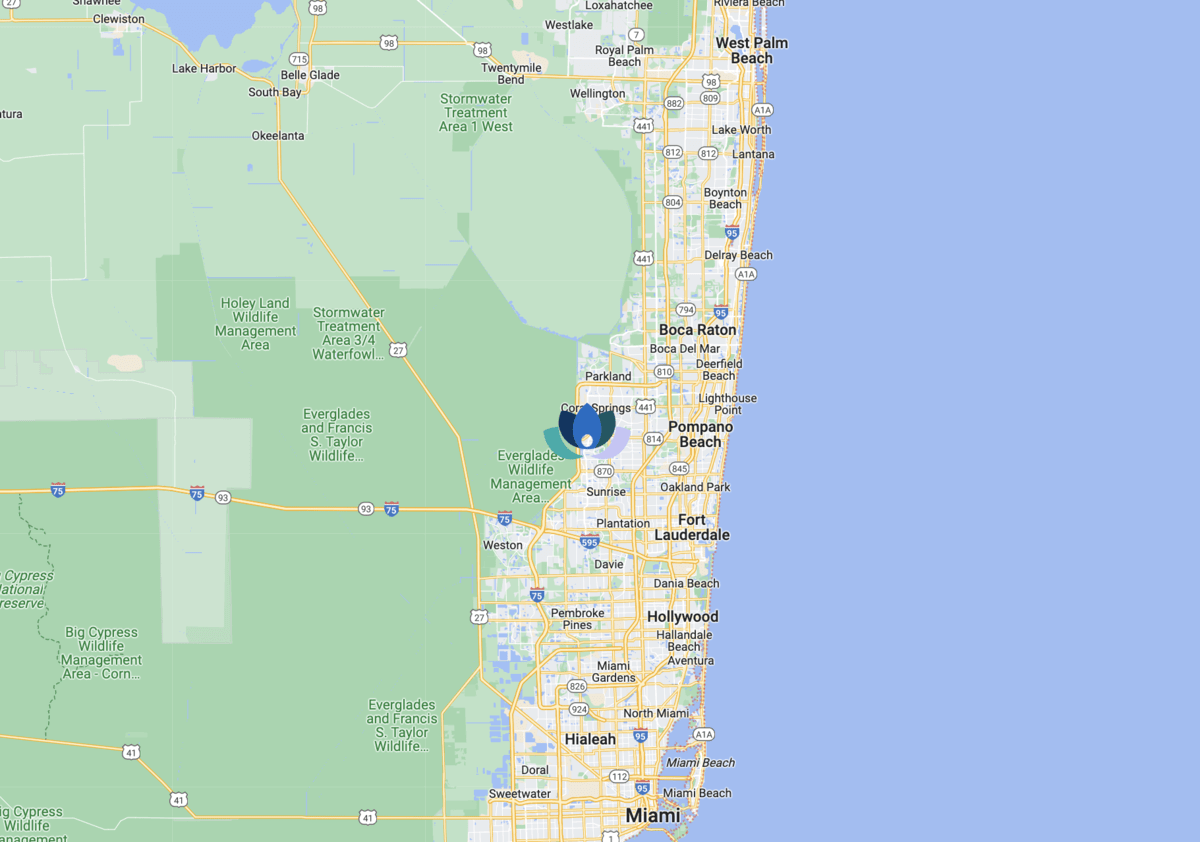
map-sylvia-brafman-mental-health-center-south-florida

Not Sure if You Have Anxious Attachment? Schedule a Free Assessment

Uncertainty is normal. You might recognize some anxious patterns but wonder if mental health treatment is necessary or right for you. A professional assessment clarifies your attachment style, identifies any co-occurring conditions, and reveals what’s driving your relational struggles. From there, a personalized treatment plan will be developed, with your unique needs and goals in mind.

At The Sylvia Brafman Mental Health Center, our free assessment helps you understand yourself deeply and determine if treatment fits your needs. Our clinicians listen without judgment, answer your questions, and create a clear roadmap if you decide to move forward. You’ll leave with clarity and confidence about your next steps. Schedule your free assessment today; taking this first step is an act of self-care and courage.

Dining area in Our Lotus House residential housing for men

If Your Partner or Loved One Has Anxious Attachment

Loving someone with anxious attachment can be exhausting. You’re constantly reassuring them, managing their emotions, walking on eggshells to prevent conflict. Their fear of abandonment feels like a bottomless pit; no matter what you do, it’s never quite enough. You may feel guilty, resentful, or trapped between compassion and burnout.

You’re not alone, and there’s help available. At The Sylvia Brafman Mental Health Center, we are well-versed in helping people with anxious attachment find relief. We have a multidisciplinary team of experts, intensive family programming, and can connect you to a network of effective mental health interventionists in Florida.

Our team can help you understand anxious attachment, set healthy boundaries, and support your partner in seeking treatment without sacrificing your own well-being. If you’d like to refer a loved one, connect with our team of compassionate patient advocates today; we can offer guidance on how to help your loved one take that first step toward healing.

Does Insurance Cover Treatment for Anxious Attachment in Florida?

Yes, insurance typically covers treatment when a diagnosable condition accompanies anxious attachment, such as an anxiety disorder, depression, PTSD, or BPD. Most Florida insurers, including Aetna, Florida Blue, UnitedHealthcare, Cigna, NYSHIP, and Magellan, cover mental health treatment at in-network providers like Sylvia Brafman.

Anxious attachment alone isn’t a billable diagnosis, but the conditions it commonly coexists with are. Our team verifies your coverage and helps you understand benefits, copays, and deductibles upfront. Don’t let insurance confusion delay your healing. Connect with our patient advocates today – we’ll navigate coverage details and get you started on your personalized treatment plan.

[]

Frequently Asked Questions About Healing From Anxious Attachment

What Triggers Anxious Attachment?

What Triggers Anxious Attachment?

Anxious attachment activates when you perceive rejection, abandonment, or withdrawal from your partner. This could be in the form of delayed text responses, emotional distance, conflict, or time apart. Uncertainty about the relationship’s stability triggers intense fear and a need for reassurance. Past abandonment experiences or inconsistent caregiving amplify these triggers, making you hypervigilant to signs of disconnection.

What Is the Difference Between Anxious Attachment and an Anxiety Disorder?

What Is the Difference Between Anxious Attachment and an Anxiety Disorder?

Anxious attachment is a relational pattern: how you relate to partners based on early experiences. An anxiety disorder is a clinical diagnosis involving persistent, excessive worry across life areas. Anxious attachment focuses on relationships; anxiety disorders affect relationships, work, health, social situations, and more. Many people with anxious attachment also experience generalized anxiety, and both benefit from professional treatment.

How Long Does It Take to Heal Anxious Attachment?

How Long Does It Take to Heal Anxious Attachment?

Healing timelines vary. You might notice shifts in weeks or months with consistent therapy, but deeper, lasting change typically takes 6-12+ months. Progress isn’t linear; you’ll have both breakthroughs and setbacks. Factors like trauma history, relationship stability, therapy intensity, and your commitment to practice all influence your timeline. Patience with yourself matters; sustainable healing is worth the time investment.

Can I Continue Work/School While in Treatment?

Can I Continue Work/School While in Treatment?

Yes. Intensive outpatient and partial hospitalization programs are designed so that you maintain your work and school commitments while receiving structured therapy. Sessions vary and can fit around your schedule. If your symptoms are severe, residential treatment removes you temporarily, but most people with anxious attachment continue their daily responsibilities while healing. Your treatment adapts to your life. Read our guide about working while in IOP for more information.