




Emotional Detachment: Signs, Causes & Treatment Options in Florida

Maybe you’ve noticed you can’t feel much anymore – emotions seem distant, muted, unreachable. Or perhaps you’re watching someone you care about pull away, growing numb to the world around them. Emotional detachment can feel isolating and confusing. The Sylvia Brafman Mental Health Center can recognize these struggles and help you reconnect with your emotions to reclaim your sense of presence.

What Is Emotional Detachment?

Life can start to feel like it is being viewed through thick glass when feelings become muted, distant, or entirely absent. Moving through the day without registering joy, sadness, anger, or fear points to emotional detachment, a state of feeling disconnected from yourself or others.

Rather than standing alone as a formal diagnosis, this numbness functions as a symptom that surfaces across different stress responses, life circumstances, or mental health disorders. Emotional detachment often happens in an involuntary attempt to avoid pain or overwhelming stress. You might also hear this phenomenon called emotional numbness or emotional blunting. Instead of protecting you, this kind of detachment keeps you stuck, unable to feel connection, joy, or even motivation.

The nuances and differences matter because they shape how you move forward. Healthy boundaries are something you choose, whereas unhealthy detachment typically happens to you –  a coping mechanism your mind uses when things feel too intense. If you’re struggling to tell the difference or suspect you’re caught in numbing patterns, we’re here to untangle it with you.

Sometimes life and the emotions that come with it can be challenging, but it is important to fully experience the full spectrum of emotions – good and bad – because you cannot have one without the other. Call The Sylvia Brafman Mental Health Center at (877) 958-9212 to start working towards a healthy emotional balance today.

African American man feeling agitated depression

What Causes Emotional Detachment?

Emotional detachment rarely appears out of nowhere. It usually develops in response to something, whether that’s past wounds, current mental health struggles, or the cumulative weight of stress. Understanding what’s driving your detachment is the first step toward reconnecting. Here are some common root causes of emotional detachment and related social symptoms:

Trauma and Adverse Experiences

When you’ve survived trauma, whether childhood neglect, abuse, a shocking event, or a deep betrayal, your nervous system learns to protect you by shutting down. Numbing becomes a survival strategy. Your mind freezes to escape unbearable pain, or you dissociate, creating distance between yourself and what’s happening around you.

This self-preservation response made sense when you needed it, but it can linger long after the threat has passed. Over time, this protective numbness can feel normal, even necessary. You might not realize you’re still in a protective crouch, afraid to feel again. Healing trauma teaches your nervous system that you’re safe now and can let your emotions back in.

Underlying Mental Health Disorders

Depression, anxiety, Post-Traumatic Stress Disorder (PTSD), and dissociative disorders frequently show up alongside emotional detachment. Depression, for example, drains color from everything; anxiety can make you numb yourself to escape the constant worry, and PTSD keeps your nervous system hypervigilant, sometimes flipping into shutdown mode where nothing registers emotionally.

These mental health disorders create their own detachment patterns, and addressing the underlying condition is crucial to reconnecting with your feelings. That’s why working with someone trained in these areas matters – they can untangle what’s driving what.

Other Contributing Factors

Chronic stress and burnout wear you down until you have nothing left to feel with. Your emotional tank runs dry. When you’re constantly in survival mode, your nervous system stays stuck in overdrive. Eventually, it shuts down as a last resort. Numbness isn’t weakness; it’s exhaustion. Certain medications can also trigger emotional blunting as a side effect.

These causes rarely show up alone. You might be managing depression, working in a high-stress job, and taking medication that dulls your emotions. Or trauma from years ago combines with current burnout, resulting in a mental breakdown. Understanding what’s contributing to your detachment (and how these factors interact) takes insight and sometimes professional eyes to see clearly. A therapist can help you untangle what’s at play and chart a path forward that addresses the root causes, not just the symptoms.

A female therapist taking notes during a mental health assessment

Signs of Emotional Detachment

Emotional detachment shows up differently for everyone, but you may recognize common patterns in yourself or someone close to you. These signs often overlap and intensify over time. If you’re experiencing several of these, pay attention and consider seeking professional support; they’re signals that something needs to shift.

  • Emotional numbness or feeling “blank”: You struggle to access feelings, even in situations that’d normally trigger them
  • Going through the motions: Life feels automatic; you’re physically present but mentally and emotionally checked out
  • Low empathy or difficulty caring: You can’t seem to muster concern for others’ problems, even people you love
  • Withdrawal and isolation: You pull away from relationships, spending more time alone and less time connecting
  • Difficulty trusting or being vulnerable: Opening up feels risky or impossible; you keep walls up around others
  • Suppressing feelings and affection: You can’t express love, warmth, or other emotions, even when you want to
  • Numbing through activities: You lean heavily on work, food, substances, or other behaviors to avoid feeling anything
  • Loss of interest in things you enjoyed: Hobbies, friendships, or passions no longer feel rewarding or engaging

Persistent emotional numbness can sometimes accompany serious mental health concerns, including thoughts of suicide. If you’re experiencing ongoing detachment alongside hopelessness or thoughts of harming yourself, please contact your local emergency services, call the 988 Suicide and Crisis Lifeline, or go to your nearest hospital immediately.

Start Your Recovery Journey at Sylvia Brafman

At The Sylvia Brafman Mental Health Center near Fort Lauderdale, Florida, our team of dedicated professionals is ready to guide you. We offer treatments and programs uniquely designed to meet your needs. If you are searching for emotional detachment therapy near Fort Lauderdale or West Palm Beach don’t wait, reach out to us today. Either give us a call or fill up the form below to request a callback.

"*" indicates required fields

This field is for validation purposes and should be left unchanged.
Please let us know your preferred way for us to contact you.
The Sylvia Brafman Mental Health Center logo - Mental Health Providers in Florida

Mental Health Disorders Often Linked to Emotional Detachment

Emotional detachment shows up across many diagnoses. Here, we’ll explore some of the most common disorders where emotional numbness plays a central role. Please note, however, that this isn’t an exhaustive list. Recognizing which condition might be at play can simply help you understand yourself better and seek the right kind of care.

Depression

Depression

Depression doesn’t always look like sadness. Sometimes it shows up as flatness: a gray, hollow feeling where nothing seems to matter. You might go through your day on autopilot, accomplishing tasks but feeling nothing about them. This emotional blunting is a core symptom of depressive disorders, especially in deeper forms.

As depression lifts with treatment, your feelings usually come back too. The colors return. But while you’re in it, that numbness can feel like your baseline, like you’ve always been this way. That’s why depression often goes unrecognized; people don’t always connect the detachment to a treatable condition.

PTSD and Complex Trauma

PTSD and Complex Trauma

After trauma, your nervous system learns to protect you by going numb. Post-Traumatic Stress Disorder (PTSD) keeps you stuck in that protective state long after the danger has passed. You might feel disconnected from your body, your relationships, even your own life. The world feels distant, muted, unsafe.

Complex trauma (repeated or prolonged abuse) deepens this pattern. Your detachment becomes more entrenched because you need it to survive. Healing requires slowly rebuilding the sense that you’re safe enough to feel again, which is why trauma-informed therapy is so important.

Dissociative Disorders

Dissociative Disorders

Dissociation is detachment taken further – your mind literally disconnects from your body or surroundings as a coping mechanism. You might experience memory gaps, feel like you’re watching yourself from outside your body, or lose time entirely. For people with dissociative disorders like DID, this disconnection is chronic and often involuntary.

These disorders develop when someone has endured severe, repeated trauma, usually starting in childhood. Treatment focuses on grounding techniques, building safety, and gradually helping your mind and body reconnect. It’s specialized work, but recovery is possible.

Personality Disorders

Personality Disorders

Some personality disorders, particularly Borderline Personality Disorder (BPD)and narcissistic personality disorder, involve emotional detachment as part of their core pattern. People with BPD might swing between intense emotions and complete numbness. Those with narcissistic traits might feel little empathy or connection to others as a way to maintain control.

Detachment in these conditions is often tied to how someone relates to themselves and others. Treatment addresses the underlying patterns, not just the symptom of numbness.

Dual Diagnosis / Substance Use

Dual Diagnosis / Substance Use

When you’re managing both a mental health condition and substance use, detachment often gets worse. Alcohol and drugs numb pain temporarily, but they also reinforce emotional blunting. Over time, you’re not sure which is causing the numbness: the depression or the drinking? The anxiety or the pills?

Dual diagnosis treatment addresses both conditions together, because treating one without the other rarely works. You need support for the mental health condition and help stepping away from the substance use that’s keeping you numb.

Is Emotional Detachment Treatable?

Yes. Emotional detachment is treatable, and reconnecting with your feelings is possible, even when numbness has been your companion for years. Your brain is wired to feel, and with the right care, you can find your way back. It takes time and patience, but you can move through this and rediscover what it means to be present in your life.

If you’re watching someone you love withdraw into emotional numbness, that fear you feel is real – but so is hope. Their detachment isn’t a choice, and it’s not a sign they don’t care about you or that the relationship is over. It’s a symptom, a protective response that made sense once. With treatment (therapy, sometimes medication management, sometimes both), they can come back. Recovery isn’t always linear, and it takes patience from both of you, but it does happen. Reaching out for help, or encouraging them to, is the first step. Sylvia Brafman can help you take the steps to get there.

Photo of a one of the rooms at SBHMC's Facility

How Emotional Detachment Is Treated at Sylvia Brafman in South Florida

At The Sylvia Brafman Mental Health Center, we start by getting the diagnosis right. Emotional detachment is a symptom, not a standalone condition, so we dig deeper to understand what’s actually driving your numbness, whether that’s depression, trauma, a dual diagnosis, or something else entirely. This clarity matters because treating the root cause is what reconnects you with your feelings.

We’ve worked with countless complex cases where surface-level treatment missed the real picture. Our team’s experience in diagnosing and untangling these layered situations means you get care that actually fits what you’re experiencing, not a one-size-fits-all approach. Through our 5 Lanes approach to treatment, we combine evidence-based and experiential modalities tailored to your specific needs to attack all 5 “lanes” of your wellness.

We frequently use Cognitive Behavioral Therapy (CBT) and Dialectical Behavior Therapy (DBT) to rewire thought patterns and build emotional skills. For trauma, we employ Eye Movement Desensitization and Reprocessing (EMDR) and other trauma-informed therapy modalities to help your nervous system process what happened and release its grip on you. We also integrate experiential therapies, such as art, music, and equine therapy, because sometimes your body needs to feel before your mind can catch up. These aren’t add-ons; they’re core to how we help you reconnect.

Group therapy is central to your healing here too. Being around others who understand what emotional numbness feels like, and who get it without judgment, breaks the isolation that detachment creates. You’re not alone in this, and group work reminds you of that. Beyond your time with us, our Family Program helps repair relationships and rebuild trust at home, while our Career Launch Program equips you with the tools and confidence to succeed in work and life after treatment ends. If you’re ready to feel again, contact us today for a complimentary mental health assessment. We’re here to help you find your way back to baseline.

Levels of Care Available at Our Facility Near Fort Lauderdale

Everyone’s path to healing looks different. That’s why we offer multiple levels of care, from intensive treatment with housing to flexible outpatient options. Whether you need consistent support or weekly sessions, we have a program designed to meet you where you are and move you toward lasting recovery.

Everyone’s path to healing looks different. That’s why we offer multiple levels of care, from intensive treatment with housing to flexible outpatient options. Whether you need consistent support or weekly sessions, we have a program designed to meet you where you are and move you toward lasting recovery.

Partial Hospitalization Program (PHP)

Partial Hospitalization Program (PHP)

Partial hospitalization programming is for when you’re dealing with moderate to severe symptoms and need intensive, structured care but aren’t in an acute crisis. You’ll attend treatment sessions during the day (typically 5-7 hours, 4-6 days per week), then return home or to our optional housing in the evening.

This level works well if you’re struggling significantly with emotional numbness, depression, trauma responses, or dual diagnosis, but you’re stable enough to be in the community outside treatment hours. We offer PHP with and without FARR-certified housing, so if you need a safe, stable place to live while you heal, we can provide that. The day treatment format keeps you accountable and engaged, while the evenings give you time to practice what you’re learning and maintain some independence. Many people find this middle ground is exactly what they need to break through emotional detachment and start feeling again.

Intensive Outpatient Program (IOP) - In-Person and Virtual

Intensive Outpatient Program (IOP) – In-Person and Virtual

Our intensive outpatient program is ideal if you have moderate symptoms but need flexibility. You’ll attend treatment sessions several times a week (typically 9-12 hours total), while sleeping at home and maintaining your work or school commitments. The intensity is real; you’re still getting substantial therapy, skills work, and clinical support. You’re just not in a residential setting.

We offer both in-person and virtual IOP, so you can choose what works for your life. Virtual care is especially helpful if you’re managing work, family, or transportation challenges. Either way, you’re getting consistent, evidence-based care without disrupting your daily routine. Our IOP works well for people with significant but manageable symptoms who benefit from a strong outpatient system.

Outpatient Program

Outpatient Program

Outpatient is our step-down program and is ideal if you’ve completed a higher level of care and need ongoing support, or if your symptoms are mild to moderate and don’t require intensive structure. You’ll meet with a therapist and psychiatrist as needed, typically once or twice a week, and work on maintaining your gains and building resilience.

This level gives you flexibility while keeping you connected to care. It’s also great if you’re functioning well in most areas but still processing trauma or managing a condition that benefits from regular therapeutic check-ins. Many people stay in outpatient care long-term because consistency matters, especially when you’re learning to feel again.

Clinical staff at our mental health facility

Why Choose Sylvia Brafman for Mental Health Treatment Near Fort Lauderdale?

Emotional detachment isn’t simple, and your treatment shouldn’t be either. At Sylvia Brafman, we untangle what’s really going on beneath the numbness. We don’t just treat the symptom; we uncover the root cause. Our clinicians take time to get the diagnosis right, because the right diagnosis leads to the right treatment. That’s how you reconnect with yourself and your life.

We meet you where you are with flexible choices that fit your life. Start with virtual IOP if you need to stay home and work, step up to in-person intensive outpatient or partial hospitalization programming if you need more support, or move into our PHP program with comfortable housing; we offer the range of care most facilities simply don’t. Whichever program you choose, you’ll have a personalized treatment plan that combines individual therapy, group work, psychiatric care, medication management (if needed), and holistic approaches to healing.

Your treatment can adjust as you heal. We also integrate your family into the process, because isolation feeds detachment and healing happens in relationship with others. Our Family Program, personally led by Chief Clinical Officer and co-founder Ben Brafman, repairs trust and communication, so you’re not doing this alone. And when you’re ready to return to work or school, our Career Launch Program, led by CEO and co-founder Jamie Blaustein, makes sure your transition is solid and sustainable.

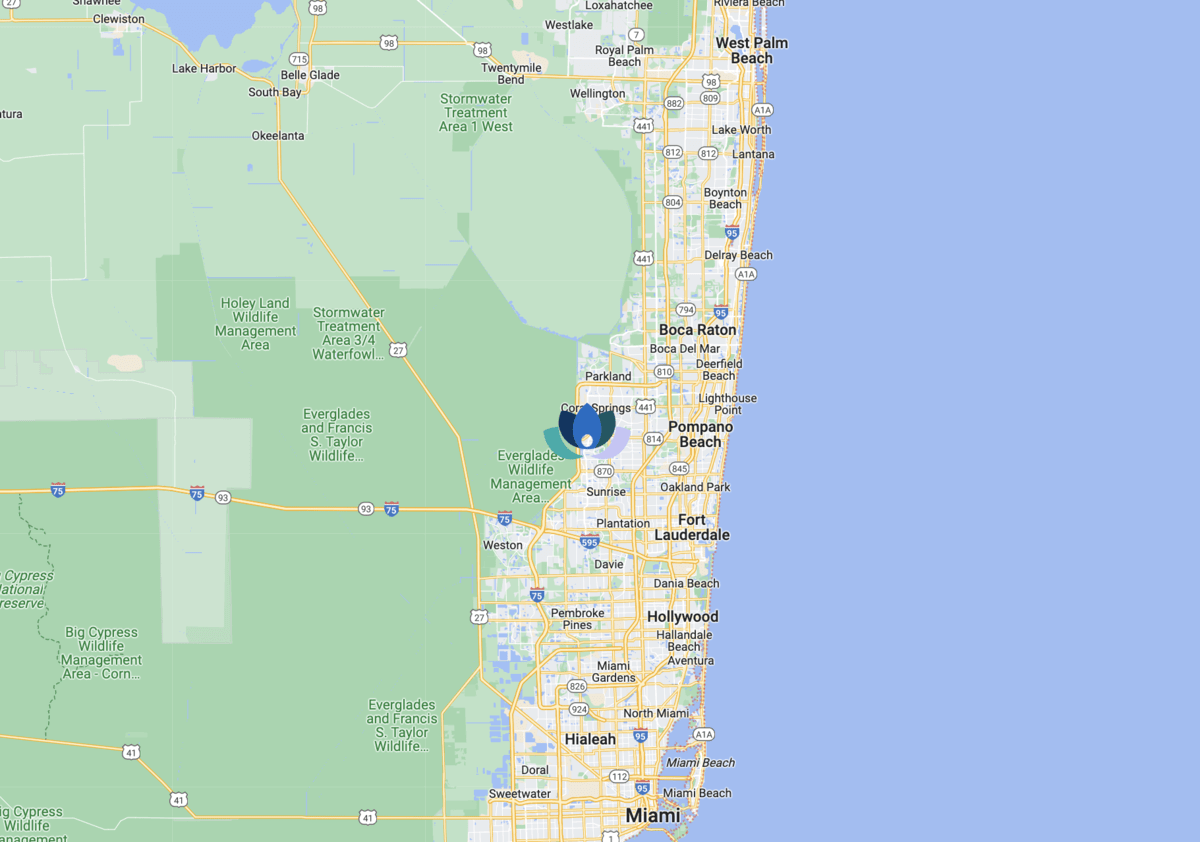
Located at 7710 NW 71ST CT, Tamarac, Florida, 33321, we’re accessible, and we’re committed to your success, whether you’re local or traveling from out of state. If you’re coming from elsewhere, we offer comfortable accommodations to help you settle in and focus fully on healing without the stress of logistics. You’ve spent enough energy feeling numb. Let us help you feel alive again. Call us at (877) 958-9212 to speak with our team of knowledgeable patient advocates and start your path forward today.

map-sylvia-brafman-mental-health-center-south-florida

Feeling Numb or Disconnected? Start With a Free Assessment

Emotional detachment can feel permanent, but it’s not. The first step is understanding what’s really happening, and that starts with talking to someone who gets it. Our free assessment is confidential, straightforward, and designed to help you see what’s driving the numbness so we can build a real plan forward together.

During your assessment, one of our clinicians will listen to your story, ask the right questions, and give you honest insight into what might be going on. There’s no judgment, no pressure, just clarity. This conversation often helps people realize they’re not broken; they’re responding to something real that absolutely can be treated. Ready to feel again? Contact our patient advocate to take advantage of our free and confidential mental health assessment.

Do Insurance Providers Cover Mental Health Treatment for Emotional Detachment in Florida?

Yes, most Florida insurance plans cover mental health treatment, including therapy and psychiatric care for emotional detachment and the conditions underlying it. Coverage varies by plan (some require copays, deductibles, or prior authorization), so check your specific policy. We work with most major insurers and can help you understand your benefits.

Treatment costs shouldn’t be a barrier to healing. If you’re uninsured or underinsured, we have financial assistance options and can discuss payment plans that fit your situation. What matters most is getting connected to care. Reach out to our team of helpful patient advocates. We’ll verify your insurance coverage, answer questions about costs, and help you move forward without the financial stress getting in the way.

Frequently Asked Questions About Emotional Detachment

You probably have questions about what you’re experiencing. Emotional detachment can feel isolating and confusing, especially if you don’t know what’s causing it or whether it’s treatable. Here are answers to the questions we hear most often from people struggling with numbness and disconnection.

What Causes a Person to Become Emotionally Detached?

What Causes a Person to Become Emotionally Detached?

Emotional detachment usually stems from trauma, chronic stress, depression, anxiety, or PTSD. It can also result from dissociative disorders, certain medications, or severe burnout. Essentially, your nervous system shuts down as a protective response when you’ve experienced too much pain or stress. It’s your mind’s way of coping; it may have once served a purpose, but it’s no longer necessary.

What Kind of Trauma Causes Emotional Detachment?

What Kind of Trauma Causes Emotional Detachment?

Childhood neglect, abuse, relational betrayal, combat exposure, and acute shock can all trigger emotional detachment. Complex trauma and repeated adverse experiences are particularly likely to create lasting numbness. Your brain learns to disconnect as a survival mechanism, freezing emotions to protect you from overwhelming pain. This protective response often persists even after the danger passes.

Can Emotional Detachment Be Reversed?

Can Emotional Detachment Be Reversed?

Yes, emotional detachment is absolutely reversible. It’s a symptom, not a permanent state. With the right therapy, like trauma-informed care, EMDR, DBT, or experiential modalities, you can reconnect with your emotions and relationships. Recovery takes time and consistent treatment, but reconnection is entirely possible.

Can Medication Cause Emotional Detachment?

Can Medication Cause Emotional Detachment?

Yes, certain medications can cause emotional blunting as a side effect. Common culprits include some antidepressants, anti-anxiety medications, and blood pressure drugs. If you suspect your medication is numbing you emotionally, talk to your psychiatrist – you can adjust your dose, try a different medication, or explore alternatives that work better.

Is Emotional Detachment a Sign of a Mental Health Disorder?

Is Emotional Detachment a Sign of a Mental Health Disorder?

Emotional detachment is typically a symptom of an underlying condition like depression, PTSD, dissociative disorder, substance use, or complex trauma – not a diagnosis itself. It can also stem from severe stress or burnout. Identifying the cause of emotional detachment is key to effective mental health care. A proper assessment will reveal what’s really going on.